


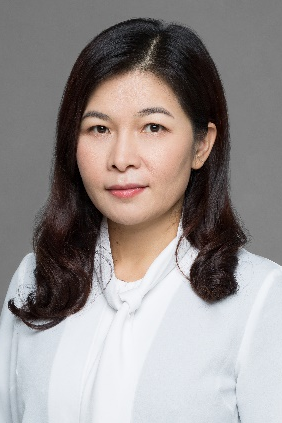
Haizhen Wu, Ph.D., is a Professor and Doctoral Supervisor at South China University of Technology, with research focuses primarily on the microbial treatment of pollutants, waste-to-resource utilization, and the efficient synthesis and application of microbial metabolites. Her student recruitment orientation is in the fields of Biology, Fermentation Engineering, and Biology & Medicine. She has conducted sustained and in-depth research on biological fluidized bed reactors, industrial wastewater reclamation, high-efficiency denitrification, and the regulation of microbial community structures and metabolic pathways, establishing a robust theoretical foundation and achieving significant practical results. To date, Professor Wu has published over 130 academic papers in prestigious international and domestic journals, including Water Research, Chemical Engineering Journal, Bioresource Technology, Journal of Cleaner Production, and Journal of Hazardous Materials, and holds 15 invention patents. In recent years, she has presided over three projects funded by the National Natural Science Foundation of China (NSFC), one subject under the National Key R&D Program, and two Guangdong Science and Technology Planning Projects, while serving as a core member on several major national and provincial initiatives. Notably, her patented biological fluidized bed reactor technology has been successfully implemented in over 50 practical engineering projects; she has also pioneered integrated technologies for deep denitrification and resource recovery, achieving large-scale applications in the treatment of coking, textile, pharmaceutical, food, and papermaking wastewaters.
Bachelor’s Degree, South China University of Technology (Sept. 1988 – July 1992)
Ph.D. in Fermentation Engineering, South China University of Technology (June 2008)
Professor Wu’s primary research focuses on Environmental Biotechnology and Applied Microbiology. Her work covers the biological treatment of pollutants, waste-to-resource utilization, and bioreactor design and engineering operation. Additionally, she specializes in microbial isolation and purification, the regulation and mechanisms of metabolic pathways, and microbial community analysis.