

BiographyYin Jianmin, Ph.D., is a recipient of the Guangdong Provincial Outstanding Young Scholar award and serves as an Associate Professor at the School of Medicine, South China University of Technology. He obtained his bachelor’s degree in Bioinformatics from Shanghai Jiao Tong University and his Ph.D. from the Mechanobiology Institute (MBI) at the National University of Singapore, where he conducted his research under the joint supervision of Professor Philip Ingham (Fellow of the Royal Society and the Academy of Medical Sciences) and Professor Timothy Saunders. He subsequently carried out postdoctoral research at the Biozentrum, University of Basel, under the mentorship of the internationally renowned developmental biologist Professor Markus Affolter. Professor Yin has long focused on the study of multi-scale mechanical interactions spanning tissues, cells, and subcellular structures. His research centers on in vivo mechanosensing, live imaging, mechanical manipulation, and computational modeling, with the aim of building an in vivo mechanobiology analysis platform for studying development and tissue homeostasis. His goal is to elucidate cellular mechanical behaviors and their regulatory roles in tissue morphology and homeostasis within authentic physiological environments, providing technical support for addressing key scientific questions in muscle development, vascular formation, and tissue remodeling. In his research, Professor Yin has systematically uncovered core mechanisms by which mechanical forces shape tissue architecture, regulate cell fate, and maintain tissue homeostasis. He has made several important discoveries in areas such as muscle development, vascular lumen formation, and homeostatic maintenance. As first or corresponding author, he has published in leading international journals, including Developmental Cell, Nature Communications, Cell Reports, PNAS, Angiogenesis, and eLife, and his work has received widespread media coverage and high recognition from the international scientific community. Professor Yin currently leads an independent research group, dedicated to advancing the frontiers of in vivo mechanobiology. He is committed to providing students with a comprehensive research platform and interdisciplinary training opportunities, fostering creative thinking and independent scientific exploration. Education2009-2013 Shanghai Jiaotong University, Bachelor 2013-2018 National University of Singapore, Ph.D 2019-2005 University of Basel, Postdoc Admission InformationWorkExperienceSocial PositionResearch AreasOur research group focuses on a seemingly simple yet highly challenging question: how cells “sense” and “use” mechanical forces to shape the structure and function of living organisms. Within real living systems, cells are not static “components,” but exist in constantly changing three-dimensional environments. They are pulled by neighboring cells, compressed by surrounding tissues, and driven by fluid flow, while simultaneously generating forces to reshape themselves and their surroundings. These invisible forces, together with classical biochemical signals, jointly determine how tissues form, maintain themselves, and undergo pathological changes. Centered on this fundamental question, our group pursues the following research directions: 1. How forces shape tissue morphology during development 2. How blood vessels form and are maintained under mechanical forces 3. From global to local: intracellular organization of forces 4. What happens when mechanical balance is disrupted To address these questions, our group has established an integrated research framework combining in vivo imaging, quantitative analysis, and physical modeling, allowing otherwise unobservable forces to be indirectly visualized and quantitatively analyzed, thereby enabling mechanistic studies within physiological contexts. In recent years, we have made a series of advances along these directions, publishing as first or corresponding authors (including co-authorship) in leading international journals such as Developmental Cell, Nature Communications, Cell Reports, Proceedings of the National Academy of Sciences, Angiogenesis, and eLife. Our work has also attracted coverage and attention from multiple media outlets. More broadly, our group seeks to address a fundamental question: to what extent are the “shape” and “structure” of living systems determined by invisible forces, and whether these principles can be harnessed for disease intervention and biomedical engineering. Courses TaughtResearch ProjectSelected Publications
AchievementsPatentHonorSoftware achievement |
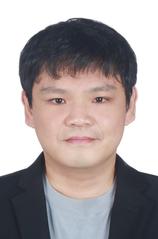 |
Yinjianmin |
|
|
|
Tel: Email: yinjm@scut.edu.cn Department: School of Medicine Office Location: B2-2502 Research Interests: Developmental and vascular biology, Bioinformatics, Mechanobiology |