


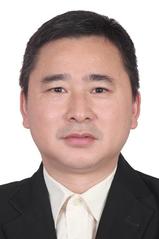
Guo Shengwen, male, Ph.D., is a professor and doctoral supervisor at the Department of Intelligent Science and Engineering, School of Automation, South China University of Technology, and the National Engineering Research Center for Human Tissue Function Reconstruction.
He obtained his Ph.D. in Engineering in 2004 from the State Key Laboratory of Bioelectronics, Southeast University, and began teaching at South China University of Technology the same year. In 2008 and 2015, he conducted research in biomedical imaging and image analysis at Case Western Reserve University and the University of Illinois Urbana-Champaign, among other institutions.
He teaches undergraduate and master's courses such as C++ Programming, Medical Image Processing, Medical Imaging Technology, and the master's course Digital Signal Processing (taught in English).
He has supervised numerous graduate and undergraduate students in national disciplinary competitions, winning over 20 awards.
Currently, he leads the Medical Imaging and Medical Electronics Team, focusing on research areas including image analysis and pattern recognition, EEG signal analysis, brain-computer interfaces, medical artificial intelligence, mixed reality technology, and medical instrument design.
In recent years, he has concentrated on the intelligent diagnosis and treatment of major diseases such as heart, brain, liver, and kidney diseases, as well as rehabilitation for patients with movement disorders. He explores physiological signal detection, processing, and analysis methods, artificial intelligence algorithms, and the application of virtual and mixed reality technologies in early disease diagnosis, accurate lesion localization, precise prognosis, and assisted rehabilitation therapy.
In recent years, he has led over 10 national and provincial-level projects, published more than 60 academic papers in high-level journals in the field, with over 30 indexed by the three major databases. He has contributed to two books in Chinese and English, holds over 20 authorized invention patents, and has obtained 4 software copyrights.
Sep 2000 – Jan 2004, Southeast University, Biomedical Engineering, Ph.D.
C++ Programming
Medical Artificial Intelligence
Digital Signal Processing