

BiographyHe Zunwu, male, was born in 1992 in Xiantao City, Hubei Province. He received his Bachelor's degree in 2014 from the Mathematics Base Class at Wuhan University. In 2019, he earned his Ph.D. (through a combined Master's-Ph.D. program) from the Academy of Mathematics and Systems Science, Chinese Academy of Sciences. He completed his postdoctoral research at the School of Mathematical Sciences, Fudan University in 2019, and subsequently joined the School of Mathematics, South China University of Technology in the same year. Research Interests: Circle packing and related fields; Discrete geometry; Spectral geometry on graphs; Geometric group theory. He admits 1-2 master's students annually. Applications from interested students are welcome. EducationSep 2014 – Jun 2019, Academy of Mathematics and Systems Science, Chinese Academy of Sciences, Fundamental Mathematics, Ph.D. (Combined Master's-Ph.D. program)
Admission InformationWorkExperienceSocial PositionResearch AreasMy current research primarily focuses on circle packing and related fields, spectral geometry on graphs , and geometric group theory. Circle Packing and Related FieldsCircle packing originally refers to configurations of circles in the plane where the interiors of the circles are disjoint and at most tangent to each other. This concept admits many generalizations. I am mainly interested in the metrics induced by circle packing on surfaces (or sphere packing in 3-manifolds), particularly the existence and uniqueness of such metrics with respect to certain geometric quantities. This area offers many research topics, and much can be learned through hands-on exploration. I warmly welcome interested students to participate. Spectral GeometryThe famous mathematician Kac once gave a well-known lecture titled Can One Hear the Shape of a Drum? My main interest lies in estimating the upper and lower bounds of Steklov/Laplacian eigenvalues on graphs and manifolds—since eigenvalues are often not computable exactly—and their relationships with geometric quantities (such as boundary volume, domain volume, etc.), especially for negatively curved objects. Geometric Group TheoryGeometric group theory became an independent mathematical discipline following the work of the Wolf Prize-winning mathematician Gromov in the 1980s. I am primarily interested in its intersection with the two areas mentioned above. Currently, there are also related research topics available. Much can be learned through active participation, and I warmly welcome interested students to take part. Courses TaughtProbability Theory and Mathematical Statistics; Research ProjectSelected Publications
AchievementsPatentHonorSoftware achievement |
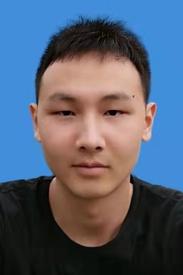 |
Hezunwu |
|
|
|
Tel: Email: hzwmath789@scut.edu.cn Department: School of Mathematics Office Location: Research Interests: Circle packing and related fields; spectral geometry on graphs; geometric group theory |